
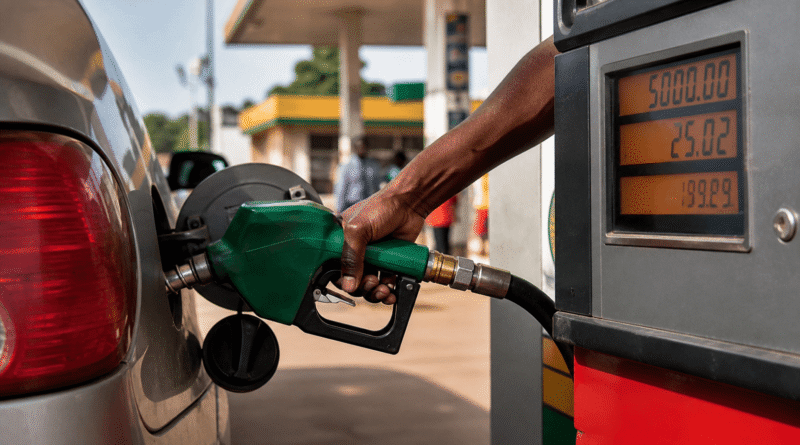
Why Petrol Prices Keep Rising in Nigeria and What It Means for You
Petrol prices in Nigeria remain a central economic pressure point, driving increases in transport fares, food prices, and the broader cost of living. Since the removal of fuel subsidy in May 2023, pump prices have risen sharply, exposing consumers more directly to market forces after years of government control.
In a country that exports crude oil but relies heavily on imported refined fuel, domestic petrol prices are shaped by a mix of global oil market movements, exchange rate fluctuations, and local supply conditions. While subsidy removal has reduced fiscal pressure on government finances, it has also introduced greater price volatility.
This article examines the key drivers of petrol prices in Nigeria, drawing on publicly available data and institutional reports, and assesses the implications for consumers and businesses.
After subsidy removal, prices shifted to the market
In May 2023, the Federal Government announced the removal of the petrol subsidy, ending a policy that had kept prices artificially low for years.
Historical price movement
Available pricing data indicates that:
- Petrol sold for approximately ₦165–₦185 per litre between 2020 and early 2023
- Prices rose to about ₦500–₦600 per litre by mid-2023 following subsidy removal
- By 2024–2025, pump prices in many locations ranged between ₦600 and ₦900 per litre, depending on supply conditions
In 2023 statements, the Nigerian National Petroleum Company Limited (NNPC Ltd.) said subsidy payments had become fiscally unsustainable, running into trillions of naira annually.
Policy shift
The change means:
- Retail prices now reflect landing costs and distribution margins
- Government no longer absorbs price differences
- Private sector participation has expanded
However, analysts note that while subsidy removal has reduced fiscal pressure, it has also exposed consumers more directly to market volatility.
Global oil prices still shape local fuel costs
Nigeria’s petrol prices remain closely tied to global oil markets, despite the country’s role as a crude oil exporter.
Benchmark trends
International energy market data indicate that Brent crude oil prices largely ranged between $70 and $100 per barrel during 2023–2024, with periodic fluctuations driven by global supply constraints, geopolitical developments, and changes in demand.
Transmission to local prices
When crude prices rise:
- Refining costs increase
- Import costs rise
When prices fall:
- Cost pressures may ease, although the effect can be offset by other factors
Because Nigeria imports a significant share of its refined petrol, domestic prices remain exposed to external price shocks.
Why the naira–dollar rate drives petrol prices
Energy analysts have consistently identified exchange rate volatility as a primary driver of fuel price fluctuations in import-dependent markets such as Nigeria.
Key dynamics
- Petroleum imports are priced in US dollars
- A weaker naira increases the local currency cost of imports
According to data from the Central Bank of Nigeria (CBN), the naira has experienced substantial volatility in recent years, contributing to rising import costs.
Practical implication
For example:
- A depreciation of the naira from ₦500/$ to ₦1,000/$ would effectively double the local currency cost of dollar-denominated fuel imports
Industry analysts note that increased import costs are typically passed through to consumers, making exchange rate stability a critical factor in determining petrol price trends in Nigeria.
The hidden costs behind fuel imports and distribution
Beyond global prices and exchange rates, domestic cost factors also play a significant role in shaping petrol prices in Nigeria.
Cost components
Industry and regulatory data, including pricing frameworks referenced by the Nigerian Midstream and Downstream Petroleum Regulatory Authority (NMDPRA), indicate that several cost layers contribute to the final price:
- Freight and marine transportation
- Port charges and regulatory fees
- Storage and depot operations
- Inland distribution and logistics
These components collectively determine the landing cost of petrol, which forms the baseline for retail pricing before margins are added.
However, inefficiencies in logistics and distribution systems can further increase these costs, contributing to regional variations in pump prices across the country.
Infrastructure challenges
Distribution inefficiencies—such as poor road networks and logistical bottlenecks—can increase costs, leading to regional variations in pump prices, particularly in inland areas.
Can local refining reduce fuel price pressure?
Nigeria’s reliance on imported fuel has long been linked to limited domestic refining capacity. However, despite the potential of local refining, its immediate impact on retail petrol prices remains uncertain.
Recent developments
- The Dangote Refinery, with a projected capacity of up to 650,000 barrels per day, has begun phased production
- Government-owned refineries are undergoing rehabilitation
Expected impact
Increased local refining could:
- Reduce dependence on imports
- Lower exposure to foreign exchange fluctuations
- Improve supply stability
These developments are expected to strengthen domestic supply over time. However, energy analysts note that the extent of any price reduction will depend on operational efficiency, distribution systems, and market competition.
How regulation shapes the fuel market
Nigeria operates a partially deregulated downstream petroleum sector.
Oversight
The Nigerian Midstream and Downstream Petroleum Regulatory Authority (NMDPRA) is responsible for:
- Licensing operators
- Monitoring pricing practices
- Ensuring compliance
Market structure
Prices are largely determined by market forces, although regulators retain oversight to prevent excessive pricing.
This reflects a balance between market liberalisation and consumer protection.
Fuel prices and their impact on inflation
Petrol prices are closely linked to Nigeria’s broader inflation trends.
Supporting data
According to the National Bureau of Statistics (NBS) Consumer Price Index report for January 2024:
• Headline inflation rose to 29.90%, up from 28.92% in December 2023
• On a year-on-year basis, inflation increased significantly from 21.82% in January 2023
• Food and non-alcoholic beverages contributed 15.49% to the inflation rate
• Housing, electricity, gas, and other fuels accounted for 5.00%, highlighting the impact of energy costs
• Month-on-month inflation stood at 2.64%, higher than 2.29% recorded in December 2023, indicating a faster pace of price increases
Transmission effect
Higher fuel prices contribute to:
- Increased transportation costs
- Rising food prices due to logistics expenses
- Higher operating costs for businesses
This creates a cost-push inflation effect across the economy.
What lies ahead for petrol prices
Based on current economic conditions and policy direction, several trends are likely.
Continued volatility
Petrol prices will remain sensitive to:
- Global oil price movements
- Exchange rate fluctuations
Gradual stabilisation potential
Expanded domestic refining may improve supply reliability and reduce import dependence over time.
However, the short-term impact on prices remains uncertain.
Ongoing macroeconomic linkage
Fuel prices will continue to reflect:
- Currency stability
- Inflation trends
- Fiscal and energy policy decisions
How rising fuel prices affect daily life
Changes in petrol prices have measurable effects across Nigerian households and businesses.
Observed trends
- Transport fares in major cities such as Lagos and Abuja rose sharply following price adjustments in 2023, reflecting increased fuel and logistics costs.
- Food prices rose as distribution costs increased
- Small and medium-sized enterprises reported higher operating expenses
These patterns align with broader inflation data and economic reports over the same period.
Petrol prices in Nigeria are shaped by a combination of global oil market dynamics, exchange rate movements, domestic supply costs, regulatory oversight, and evolving local refining capacity.
The removal of fuel subsidy has exposed the sector more directly to market forces, resulting in short-term price volatility while laying the groundwork for a more market-aligned system. However, the pace at which this transition delivers price stability remains uncertain.
Future price trends will depend largely on currency stability, the efficiency of domestic refining operations, and improvements in distribution infrastructure.
For consumers and businesses, a clear understanding of these underlying factors will be critical in navigating the continuing economic impact of fuel pricing in Nigeria.