
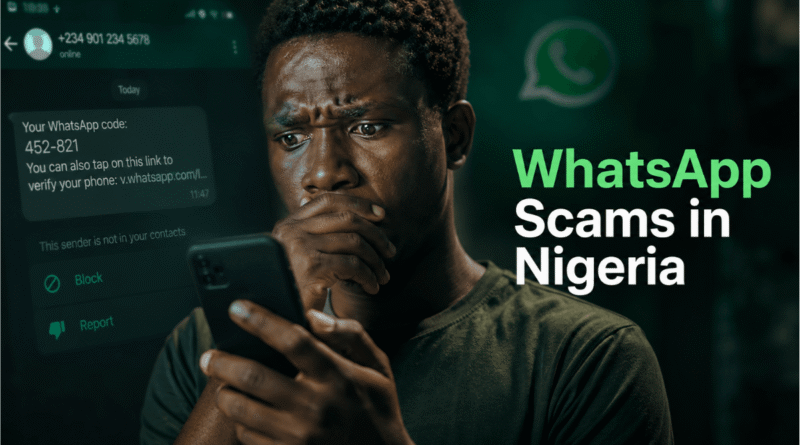
How Nigerians Are Losing Their WhatsApp Accounts in Seconds — And How to Stay Safe
For millions of Nigerians, WhatsApp is no longer just a messaging app.
It has become part of everyday life — used for business transactions, family communication, banking alerts, school groups, church activities, customer support, and even job opportunities.
But as WhatsApp usage continues to grow across Nigeria, so has a more dangerous problem: account hijacking.
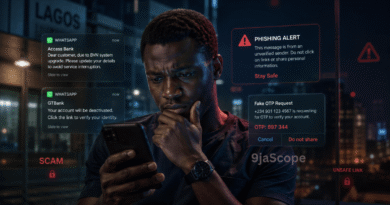
Across social media platforms and digital communities, complaints about stolen WhatsApp accounts have increased sharply in recent months, with many victims discovering too late that scammers had already taken control of their profiles and started contacting friends, relatives, customers, and business associates.
In many cases, the attack does not begin with sophisticated hacking tools.
It starts with a phone call, a fake verification request, a deceptive link, or a moment of panic.
And for average users, that single mistake can lock them out of years of conversations, business contacts, and sensitive personal information.
The Most Common WhatsApp Scam Nigerians Are Facing
One of the fastest-growing tactics involves scammers pretending to know the victim personally.
Sometimes they claim to be:
- a colleague,
- a church member,
- a school group administrator,
- a bank representative,
- or even a friend trying to help arrange an urgent meeting.
Victims are then asked to read out a verification code sent to their phones.
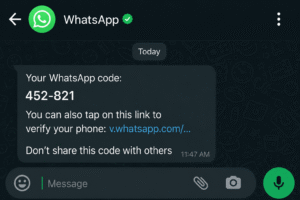
What many people fail to realize is that the code is actually the WhatsApp login verification needed to move the account to another device.
Once the code is shared, access to the account can disappear within minutes. Before forwarding messages, practising the principles of Digital Citizenship in Nigeria can help prevent scams.
Some victims only realize their accounts have been hijacked after friends begin calling to confirm urgent money requests supposedly sent from their WhatsApp numbers.
By that stage, scammers may already be impersonating the victim across multiple chats and group conversations.
In some cases, fraudsters have reportedly entered church, school, workplace, and family WhatsApp groups pretending to be the victim while requesting emergency financial help.
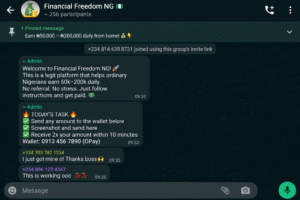
Because the requests appear to come from trusted contacts, many people fall for them.
That is what makes these scams dangerous.
They exploit trust more than technology.
Why the Problem Is Getting Worse
The scams are becoming more convincing because fraudsters now combine social engineering, leaked personal information, and more automated scam messaging tactics.
In some cases, scammers already know:
- your name,
- workplace,
- social circles,
- or recent online activities.
That information helps them sound believable during calls or chats.
Spam calls, fake customer-care accounts, cloned bank messages, suspicious investment offers, and impersonation scams have also continued spreading across Nigeria’s digital space.
At the same time, scam messages are becoming cleaner, more natural, and harder for ordinary users to detect.
Many no longer look obviously fake.
The Mistakes Many WhatsApp Users Still Make
Despite repeated warnings, many users still leave their accounts poorly protected.
Some common mistakes include:
- not enabling two-step verification,
- sharing verification codes,
- clicking suspicious links,
- using public Wi-Fi carelessly,
- and ignoring login notifications from unfamiliar devices.
Others use the same phone number for:
- banking,
- business,
- and personal communication
without adding extra security protection.
That creates a larger risk if the number becomes compromised.
Another growing concern involves SIM-related fraud.
Once criminals gain access to a victim’s phone line through SIM swap attacks or social engineering, recovering WhatsApp accounts becomes far more difficult.
A single compromised number can quickly affect:
- personal contacts,
- financial relationships,
- customers,
- and workplace communication.
How Nigerians Can Protect Their WhatsApp Accounts
The good news is that most WhatsApp hijacking attempts can still be prevented with simple habits many users ignore.
1. Turn On Two-Step Verification
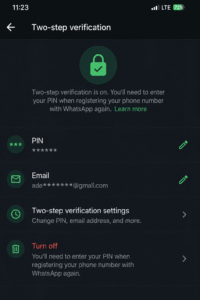
This remains one of the strongest protections available.
Once activated, WhatsApp requires an additional PIN before the account can be linked to another device.
Even if scammers obtain the verification code, the extra PIN creates another security barrier.
2. Never Share Verification Codes
No legitimate WhatsApp staff member, bank representative, or group administrator should ask for your verification code.
Any request for that code should immediately be treated as suspicious.
No exceptions.
3. Be Careful With Urgent Requests
Scammers often create panic deliberately.
They may claim:
- your account will be suspended,
- a meeting is starting immediately,
- your bank profile has been compromised,
- or a family member urgently needs help.
That pressure is intentional.
The goal is to stop victims from thinking carefully before reacting.
4. Verify Requests Outside WhatsApp
If someone claims to be your friend, colleague, or relative:
- call the person directly,
- confirm through another platform,
- or speak with them using a trusted number.
Do not rely only on the WhatsApp message itself.
5. Avoid Suspicious Links
Many attacks now begin with fake:
- loan offers,
- giveaway pages,
- investment promotions,
- or cloned banking websites.
Before clicking any link:
- check the sender carefully,
- verify the web address,
- and avoid downloading unknown applications.
6. Protect Your SIM Card and Email
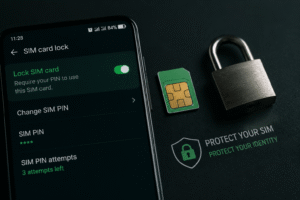
Your WhatsApp account is only as secure as the phone number and email connected to it.
Use:
- SIM PIN protection,
- strong passwords,
- and updated recovery details.
What To Do If Your WhatsApp Account Is Hacked
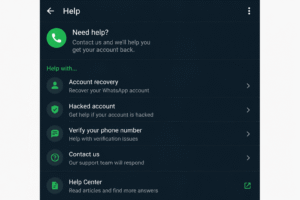
If you suddenly lose access to your account:
- try logging back into WhatsApp immediately,
- notify trusted contacts quickly,
- contact your mobile network provider,
- begin WhatsApp recovery steps,
- and warn people not to send money to your number.
Speed matters.
The longer scammers control an account, the more people they may target using the victim’s identity.
Why Digital Awareness Matters More Than Ever
Nigeria’s digital economy continues to expand rapidly, with more people depending on smartphones for communication, banking, online business, remote work, and everyday transactions.
As online fraud, phishing attacks, social media scams, and identity theft continue to rise, discussions about internet safety in Nigeria have become more important than ever for ordinary users trying to stay protected online.
But as digital dependence increases, scams are evolving just as quickly.
Many WhatsApp attacks succeed not because the technology is weak, but because users are emotionally manipulated at the right moment.
That is the uncomfortable reality behind many account hijacking cases.
For many Nigerians today, protecting a WhatsApp account is no longer just about privacy.
It is about protecting identity, business relationships, personal trust, financial security, and the everyday connections people now rely on to live and work online.

Pingback: Internet Safety in Nigeria: Common Online Threats Explained